
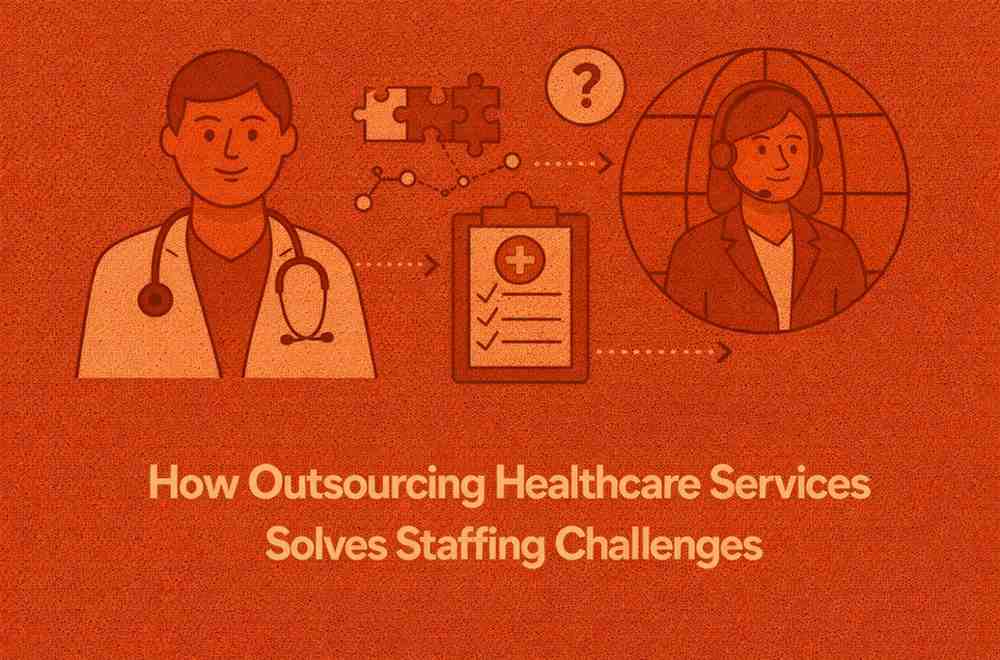
Staffing has become one of the biggest operational headaches for medical practices across the country. Whether it’s a small clinic or a multi-specialty group, practice owners are facing the same issue. It’s getting harder to hire, train, and retain reliable healthcare staff.
From front desk burnout to billing backlogs and rising payroll costs, the pressure keeps building.
This is where outsourcing healthcare services is changing the game.
Instead of constantly battling recruitment delays and high employee turnover, many practices are turning to healthcare outsourcing services to stabilize operations, reduce stress, and improve revenue performance.
Let’s explore how this model is helping medical practices overcome staffing challenges in a practical, sustainable way.
Growing Staffing Crisis in Healthcare
Healthcare staffing shortages are no longer temporary. They’ve become a long-term operational challenge.
Medical practices today struggle with:
- High employee turnover
- Staff burnout
- Recruitment expenses
- Training time and onboarding delays
- Rising payroll and benefit costs
- Frequent absenteeism
- Limited backup coverage
Even when you finally hire someone, retention becomes another battle.
Front desk staff leave after burnout. Billing specialists get poached. Call center employees resign without notice. The cycle repeats and patient care suffers in the process.
This is exactly why healthcare staffing solutions are shifting toward outsourcing and remote workforce models.
Why Medical Practices Are Struggling to Hire and Retain Staff
The traditional hiring model is expensive and unpredictable. Here’s what most practices experience:
- Long Hiring Timelines
Finding experienced medical billing staff or referral coordinators can take weeks and sometimes months.
- Increasing Payroll Costs
Salaries, taxes, benefits, insurance, training and the total cost of in-house staffing keeps rising.
- Burnout & Workload Pressure
Front desk teams are answering phones, verifying insurance, scheduling appointments, and handling patient complaints often simultaneously.
- HR and Compliance Burden
Managing performance issues, sick leave, and turnover consumes valuable management time.
Over time, these pressures impact patient satisfaction and revenue cycle performance. This is where outsourcing healthcare services offers a practical solution.
What Healthcare Services Can Be Outsourced?
Many practice owners are surprised by how much can be handled through remote healthcare staffing.
Commonly outsourced services include:
- Revenue cycle management (RCM outsourcing services)
- Front desk operations
- Insurance eligibility verification
- Prior authorization and referrals
- Appointment scheduling
- Healthcare call center outsourcing
- Payment posting and denial management
Instead of hiring multiple in-house employees, practices can partner with a healthcare staffing company that provides trained professionals under a structured FTE healthcare staffing model.
How Outsourcing Healthcare Services Reduces Staffing Pressure
Outsourcing is not just about cost savings, it’s about operational stability.
Here’s how it directly solves healthcare staffing challenges:
- Immediate Access to Skilled Talent
No long hiring cycles. Outsourcing partners provide trained professionals ready to start.
- Reduced Burnout
By outsourcing administrative tasks like billing or scheduling, in-house staff can focus on patient care.
- Built-In Backup Support
Many healthcare BPO services offer backup resources, eliminating single points of failure.
- Scalable Workforce Solutions
Need more support during peak seasons? Scaling becomes easier with remote healthcare staffing.
- Lower Administrative Burden
HR challenges, recruitment expenses, and performance monitoring shift to the outsourcing partner.
This operational flexibility helps practices handle staffing shortages without constant disruption.
Cost Benefits of Healthcare Outsourcing
One of the biggest concerns practice owners have is cost. But when you break it down, outsourcing healthcare services often reduces overall expenses.
Consider the hidden costs of in-house staff:
- Salary and overtime pay
- Health benefits and insurance
- Paid leave and absenteeism
- Office space and equipment
- Training and onboarding costs
- Recruitment agency fees
When practices outsource medical billing services or front desk operations, they often gain:
- Predictable monthly costs
- No HR overhead
- Reduced payroll burden
- Improved revenue cycle performance
- Higher operational efficiency
In many cases, outsourcing pays for itself through improved collections and fewer claim denials.
How Remote Healthcare Staffing Improves Continuity
Staff turnover creates workflow gaps. One resignation can disrupt:
- Appointment scheduling
- Claim submission
- Insurance verification
- Patient follow-ups
- Denial management
With remote healthcare staffing, continuity improves because outsourcing providers maintain structured teams and replacement models.
Instead of scrambling to hire someone new, you maintain a consistent workflow.
This stability enhances:
- Patient satisfaction
- Revenue growth
- Workflow optimization
- Operational confidence
And that peace of mind matters.
Is Healthcare Outsourcing HIPAA Compliant?
A common question medical practices ask is about data security. Reputable healthcare outsourcing companies operate under strict HIPAA compliance guidelines. They use:
- Secure VPN connections
- Encrypted communication tools
- Access control systems
- Compliance training programs
- Secure EMR access protocols
As long as you partner with a reliable provider, healthcare outsourcing remains fully compliant and secure.
How Outsourcing Improves Revenue Cycle Management
Staffing challenges often show up in revenue. When billing teams are understaffed:
- Claims get delayed
- Denials increase
- AR aging rises
- Payment posting slows
- Follow-ups get missed
By choosing to outsource revenue cycle management, practices gain dedicated billing specialists focused only on collections and denial resolution. The result?
- Faster claim submission
- Lower rejection rates
- Improved cash flow
- Reduced AR days
This is one of the strongest reasons practices adopt RCM outsourcing services.
Outsourcing for Small and Mid-Sized Practices
Smaller clinics are hit hardest by staffing shortages. They may not have the budget for large in-house teams, yet they still face:
- Front desk overload
- Billing backlogs
- Missed calls
- Patient complaints
For these practices, healthcare staffing solutions for small practices provide affordable access to experienced professionals without long-term hiring commitments. Instead of managing multiple roles internally, they streamline operations through outsourcing partnerships.
Choosing the Right Healthcare Outsourcing Partner
Not all providers are the same. When selecting a healthcare BPO services partner, look for:
- Experience in medical practice operations
- Dedicated FTE staffing model
- Clear communication channels
- Transparent reporting
- Backup and continuity plans
- Industry expertise in RCM and front desk workflows
The right partner doesn’t just provide staff — they become an extension of your practice.
Final Thoughts
Staffing challenges in healthcare aren’t going away anytime soon. Hiring delays, burnout, and rising costs continue to pressure medical practices across the country. But practices no longer have to solve these problems alone.
Outsourcing healthcare services offers a strategic way to stabilize operations, reduce staffing stress, and improve financial performance — without increasing overhead.
From front desk support to medical billing outsourcing and revenue cycle management, healthcare outsourcing services provide scalable, cost-effective solutions tailored to modern practice needs.
If staffing shortages are holding your practice back, it may be time to rethink the traditional hiring model — and consider a smarter, more sustainable workforce strategy.
How Outsourcing Healthcare Services FAQs
How exactly does outsourcing help with staffing shortages?
Think of it this way instead of waiting weeks to fill a position, you already have trained professionals ready to step in. Remote healthcare staffing allows tasks like billing, scheduling, and insurance verification to continue without disruption. It’s less about replacing staff and more about keeping operations stable.
Is outsourcing medical billing really more affordable than hiring someone in-house?
In many situations, yes and not just because of salary. When you hire in-house, you are also paying for benefits, workspace, equipment, and sometimes overtime. When you outsource medical billing services, you typically pay a fixed monthly cost. That predictability alone makes budgeting much easier for most practices.
What services can actually be outsourced in a medical practice?
More than most people expect. Practices commonly outsource medical billing, revenue cycle management, front desk scheduling, prior authorizations, eligibility verification, denial follow-ups, and even call center support. Virtual healthcare assistants can handle a surprising amount of administrative workload.
Is it safe to outsource healthcare services? What about HIPAA?
That’s usually the first concern and it should be. A reliable healthcare outsourcing company will operate under strict HIPAA compliance guidelines. Secure systems, controlled access, and encrypted communication are not optional. Before partnering with anyone, it is always smart to ask detailed questions about data security.
Can small or independent practices really benefit from outsourcing?
Actually, small practices often benefit the most. They usually don’t have the budget for large in-house teams, yet they face the same administrative workload as bigger groups. Healthcare staffing solutions give them access to experienced support without long-term hiring commitments or payroll stress.
How do I know if outsourcing is the right move for my practice?
If your team feels stretched, claims are getting delayed, phones aren’t answered consistently, or turnover keeps disrupting your workflow that’s usually a sign. Outsourcing healthcare services is not about replacing your staff. It is about creating stability and protecting your revenue cycle.